my account
 pay my bill
 help & support
 outages
 contact us
 about us
 our communities
 our team
 energy solutions
 water solutions
 data solutions
 sustainability
 news
news

Loading ...

Altogether partners with developers, body corporates and businesses to design embedded networks that go beyond simple supply, creating utility services tailored to the way each community actually lives and works.
Australian communities are changing the way they think about energy. Instead of relying solely on a traditional central grid with its own retailer contract, more developments are turning to embedded energy networks that can deliver cost benefits for owners and residents.
Altogether Group sits at the centre of this shift, delivering reliable localised essential services through modern embedded networks that combine electricity, water, smart infrastructure and data into one integrated solution.
For decades, the standard model has been simple: every dwelling connects individually to the main electricity grid, each customer negotiates their own retail plan, and utilities are treated as a necessary commodity rather than a strategic asset.
That model is under pressure:
Energy prices are volatile and difficult to forecast over the life of a development.
Residents are demanding more sustainable and transparent energy solutions.
Buildings are becoming far more complex, with EV charging, distributed solar, batteries and digital metering now expected as standard in many premium projects.
Developers and owners corporations are looking for ways to reduce operational risk while enhancing the value proposition of their assets.
Embedded energy networks offer a different approach. Instead of treating each home as an isolated customer at the edge of the grid, they treat the entire building or community as a single energy ecosystem, one that can be designed, optimised and operated for long‑term performance.
An embedded energy network is essentially a private electricity network within a building, precinct or community.
Instead of every apartment or lot having its own direct grid connection and retail contract, the community has:
One main connection (or “parent meter”) to the grid.
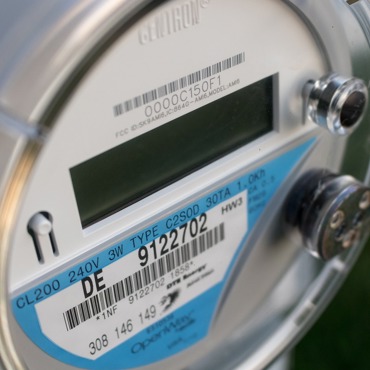
Internal infrastructure: Wiring, switchboards, sub‑meters and smart controls, distributing electricity to each dwelling and shared area.
A specialist operator (like Altogether Group) who purchases energy on behalf of the community, manages the network and bills individual residents or businesses for their actual usage.
An embedded energy network sits between the traditional grid and the end user, adding an extra layer of local control and optimisation. It is still regulated and operates within the broader Australian energy framework, but it unlocks efficiencies and flexibility that conventional one‑to‑one retail arrangements cannot provide.
For residents, the experience is familiar, they receive an energy bill, have access to customer support and, in modern models like Altogether’s, maintain consumer protections and flexibility. For developers, owners corporations and strata managers, it opens up new options to improve financial performance, sustainability credentials and amenity.
In an Altogether community, the embedded energy network is planned from day one, so metering, billing and future technologies like EV charging are already built into the fabric of the site.
In a traditional setup, energy is something that simply arrives at the meter. In an embedded network, energy becomes a shared asset for the community.
The entire site is treated as one load, so the operator can:
Leverage bulk purchasing to secure more competitive energy rates than individual customers typically can.
Optimise demand across the site, using smart metering and control systems.
Layer in additional technologies like rooftop solar, battery storage and EV charging in a coherent, whole‑of‑site way rather than as isolated retrofits.
This transforms a building or precinct from a collection of disconnected meters into a coordinated energy community, one that can actively participate in the transition to cleaner, smarter energy.
Cost is often the first question for residents and businesses, and embedded networks are designed to compete on value.
By aggregating demand and purchasing energy at scale, an embedded network can help:
Can offer competitive per‑unit energy pricing compared to what some residents may secure individually.
Smooth volatility by leveraging long‑term procurement strategies.
Improve efficiency through optimised network design, loss management and smart metering.
For B2B stakeholders, the value extends beyond headline tariffs. A well‑designed embedded network can:
Lower lifecycle operational costs compared to a patchwork of individual grid connections.
Reduce the complexity and cost of on‑site infrastructure in dense or complex developments.
Support more predictable outgoings for owners corporations and body corporates over time.
These efficiencies support a stronger commercial proposition for projects while delivering tangible savings to end users.
Sustainability is central to how developments are assessed by buyers, tenants, investors and regulators.
Embedded networks are a powerful enabler of decarbonisation because they make it easier to:
Integrate rooftop solar at scale across common areas and private lots.
Add battery storage to better use locally produced renewable energy, reduce peak demand and support resilience.
Provide EV charging infrastructure that is fairly and transparently billed to users.
Collect granular consumption data to inform building tuning, NABERS ratings and ESG reporting.
Altogether’s vision is to deliver reliable, localised essential services that help communities participate in Australia’s transition to net zero. By designing embedded networks with renewables and smart controls from the outset, it becomes possible to materially reduce emissions across a whole community rather than just at the level of individual households.
As extreme weather events and network constraints become more common, resilience is increasingly top‑of‑mind.
Embedded networks enhance reliability by:
Using modern, site‑specific infrastructure designed for the building or precinct.
Allowing integration of on‑site generation and storage that can support the community during broader grid issues.
Enabling smarter management of load, reducing stress on critical equipment.
For residents, this can translate into fewer disruptions, faster issue resolution and a more transparent relationship with their energy provider. For asset owners and managers, it reduces the risk of tenant dissatisfaction and operational surprises.
The value of embedded networks is particularly strong for developers, owners corporations, strata managers and institutional asset owners who are responsible for multi‑tenant sites.
Altogether is a multi‑utility provider, not just an energy retailer. That means it can design and deliver a combination of:
Embedded energy networks.
Recycled water and wastewater solutions.
Smart grids and digital metering.
Broader localised essential services that support modern communities.
This integrated approach reduces the need to coordinate multiple utility providers across the design, construction and operational phases. Instead, they can work with a single partner that understands the whole‑of‑community picture and is aligned to long‑term performance.
Regulation of embedded networks has evolved significantly in recent years, with a strong focus on consumer protections and fair access. In older models, owners corporations could find themselves holding retail exemptions and, by extension, a range of obligations and risks they were not set up to manage.
Altogether’s embedded network models are designed to remove that burden.
Two common approaches are:
Retail embedded energy networks
Altogether acts as the authorised retailer, supplying energy to residents within the embedded network. This removes the need for the body corporate to rely on retail exemptions and helps reduce its exposure to compliance and retail risk. Residents gain the benefits of an embedded network while retaining access to appropriate protections and clear, regulated retail arrangements.
Agency embedded energy networks
For communities that prefer a not‑for‑profit approach to energy services, Altogether can act as an agent on behalf of the body corporate. This model focuses on value for money for residents, while Altogether manages efficiency, cost‑effectiveness and compliance risk day‑to‑day.
In both cases, B2B stakeholders avoid becoming accidental energy retailers and can rely on a specialist operator whose core business is to manage the network safely, fairly and efficiently. Instead of every home or business negotiating its own retail deal, the community benefits from a curated, precinct‑scale solution managed by Altogether.
Embedded networks, when executed well, can be a differentiator in competitive markets.
They support:
Improved sustainability credentials and alignment with ESG targets.
Higher resident satisfaction through more predictable bills, modern amenities and strong customer service.
The ability to position a development as a smart, future‑ready community with integrated energy, water and digital services.
This can contribute to:
Stronger sales and leasing performance.
Better tenant retention in build‑to‑rent or commercial settings.
A more compelling long‑term investment story for institutional owners.
For decision‑makers evaluating options, the choice often comes down to whether to treat utilities as a series of disconnected services, or as a strategic, integrated part of the community.
Here is a simplified comparison:
|
Aspect |
Traditional utilities connection |
Embedded network with a specialist operator |
|
Grid connection |
Each dwelling or tenancy connects individually to the main grid |
One main connection feeding a private embedded energy network within the site |
|
Procurement |
Residents negotiate their own retail contracts |
Energy purchased at scale on behalf of the community |
|
Tariffs and costs |
Individual retail plans, limited site‑wide optimisation |
Optimised tariffs and network design for the site as a whole |
|
Sustainability |
Ad hoc solar or efficiency measures at unit level |
Integrated solar, batteries, EV charging and smart controls at community level |
|
Compliance and risk |
Bodies corporate rarely directly involved, but limited control |
Specialist operator manages regulatory obligations and consumer protections |
|
Operational complexity |
Multiple utility providers, fragmented responsibilities |
Single partner for design, delivery and ongoing management |
|
Resident experience |
Traditional retail relationship with varying service levels |
Community‑oriented service with tailored support and transparent billing |
For many contemporary developments, the embedded network model provides a more coherent and future‑ready foundation. Altogether already supports hundreds of communities across Australia with integrated power, water and data services, so residents experience utilities as one seamless, localised service rather than a patchwork of separate providers.
Embedded networks are particularly well suited to:
Medium‑ and high‑density residential developments.
Mixed‑use precincts combining residential, retail and commercial space.
Retirement and lifestyle communities.
Master‑planned greenfield communities.
Large strata schemes and build‑to‑rent portfolios.
If your project:
Has multiple dwellings or tenancies sharing common infrastructure.
Seeks to differentiate through sustainability, technology and resident experience.
Wants to avoid holding retail exemptions or managing energy compliance internally.
Needs a partner to integrate energy with other localised essential services.
For developers, partnering with Altogether means the complexity of designing and operating an embedded network is handled by a specialist, from early masterplanning through to long‑term operations.
Seachange Toowoomba shows how an embedded energy network can quietly support better everyday living in a modern community. Altogether provides a localised energy service for residents, combining efficient central infrastructure with smart metering so homeowners have clearer visibility of how they use power across the seasons. This setup helps keep costs more predictable, supports sustainability outcomes for the community, and demonstrates how embedded networks can be woven into lifestyle‑focused developments without adding complexity for residents.
Australians are looking for more than just energy, they want communities that are resilient, sustainable and easy to live in. Embedded networks are a key part of that shift, turning utilities from a set of isolated services into a coherent, community‑scale system.
Altogether’s focus on reliable localised essential services means it can help developers, owners corporations and asset managers deliver:
Cost‑effective, future‑ready energy infrastructure.
Genuine sustainability outcomes aligned with net‑zero goals.
A better everyday experience for residents and businesses.
Altogether already operates embedded energy networks in flagship communities such as Q1 on the Gold Coast and Seachange Toowoomba, demonstrating how localised, data‑rich utility services can lower costs and support more sustainable living across more than 500 communities nationwide.
If you are planning a new development or looking to optimise an existing asset, exploring an embedded network early in the design process can unlock value that traditional utility models simply can’t match.


Learn how your community can live more sustainably. Share tips and "waste hacks".
Check us out here.